How Much Does It Really Cost to Study in UK? A Complete Guide
Studying in the UK is a dream for many Indian students. With world-class universities, rich cultural experience, and international exposure, the UK offers an excellent education. But understanding the cost of study in UK is vital before you make any plans. Without good budgeting, students may face unexpected financial pressures during their time abroad. In this detailed guide, we’ll break down the cost of study in UK, explain all major expenses, provide city- and course-wise examples, and offer tips to manage your finances effectively.

Team Vidysea
November 20, 2025

Overview of the Cost of Study in UK
The cost of study in UK is not just about tuition fees. It includes a mix of several key elements:
- Tuition fees – Depending on the university, course and location.
- Living expenses – Rent, food, transport, utilities, and other daily needs.
- Insurance & healthcare – Health cover is required for international students.
- Travel & visa costs – Flights, visa application fees, and occasional trips home.
- Books & supplies – Study materials, laptop, software, and other course-related expenses.
On average, many international students in the UK can expect to spend anywhere between £14,000 and £22,000 per year on living expenses alone.Tuition fees vary widely (see below). Understanding the total cost of study in UK ahead of time helps you plan better and avoid financial stress.
Tuition Fees for Different Programmes
Undergraduate Programmes Tuition fees for international undergraduates depend on whether you choose a top-tier university + course and where in the UK you study. According to official sources:
- International undergraduate tuition fees typically range from £11,400 to £38,000 per year.
- For example, humanities or social sciences might be at the lower end; medicine, engineering or other specialised courses may cost more.
Choosing the right university and course based on your budget is important.
Postgraduate Programmes Postgraduate (Master’s, MBA, research) programmes vary:
- Many international master’s degrees cost £9,000 to £30,000+ per year.
- Highly specialised courses (MBA, certain research heavy subjects) can cost more.
- One advantage: many UK master’s courses are just 1 year long, which can reduce the overall cost of living and studying.
Living Expenses in the UK
Living expenses make a large part of the cost of study in UK. Students need to budget for:
- Rent: On-campus student accommodation or private rentals. For example, private rentals in many UK cities outside London can cost ~£610/month for a one-bedroom outside city centre.
- Food: £150-£250/month on groceries and some dining out is typical.
- Transportation: Student passes, buses, trains. For example, monthly transport outside London may be £50-£100.
- Utilities & Internet: These also add up.
- City-wise comparison (approx):
- London: You might budget £1,300-£1,400 per month for living costs (rent+utilities+food+transport) in London.
- Other UK cities: Budget around £900-£1,300 per month in many locations.
By taking living expenses into account, you can more accurately estimate the total cost of study in UK for your specific circumstances.
Additional Costs to Consider
In addition to tuition + living, there are other essential expenses:
- Visa and immigration health surcharge: For example, the UK student visa cost plus health surcharge (Immigration Health Surcharge) which international students must pay.
- Books & study materials: It may cost several hundred pounds per year.
- Travel: Flights to and from India, trips during studies.
- Miscellaneous: Phone bills, clothing, social activities, etc. Not budgeting these can lead to under-estimating the cost of study in UK.
Cost of Study in UK for Popular Courses
Here’s a rough breakdown for popular courses (tuition + other costs):
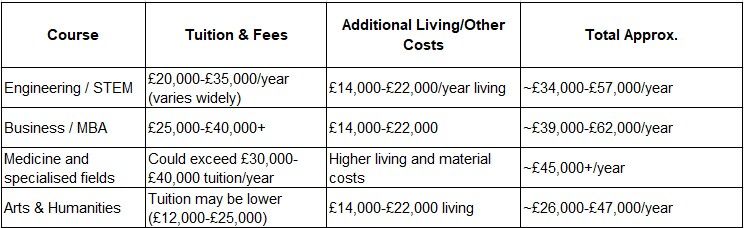
These are approximate. Your actual total cost depends on university, city, course, lifestyle. The key takeaway: you should evaluate both tuition and living/other expenses to estimate your full cost of study in UK.
How to Reduce and Manage the Cost of Study in UK
Here are practical tips to manage your expenses:
- Part-time jobs: International students in the UK are typically allowed to work up to 20 hours per week during term time.
- Choose more affordable cities: Instead of London, consider other UK cities where rent and living costs are lower. For example, monthly budgets outside London can be significantly less.
- Budgeting: Track monthly expenses for rent, food, transport, utilities to avoid overspending.
- Scholarships & assistantships: Many UK universities and scholarship bodies offer financial aid for international students. Explore university-specific scholarships, government schemes.
- Housing options: Shared apartments, student halls, off-campus housing further from city centre can reduce rent significantly.
With good planning, you can reduce the overall cost of study in UK and make your study experience smoother and less stressful.
FAQ: Cost of Study in UK
- What is the average cost of study in UK for Indian students? On average, living expenses alone range between £14,000-£22,000 per year depending on city and lifestyle. Tuition varies widely.
- How much do undergraduate programmes cost? International undergraduate tuition: circa £11,400-£38,000 per year.
- What are the living expenses for students in the UK? Living expenses may be approx £900-£1,300 per month outside London, and £1,300-£1,400+ per month in London.
- Can scholarships reduce the cost of study in UK? Yes — many scholarships, bursaries and financial aid schemes exist. Early application and research are key.
- Are there hidden costs students should know about? Yes — visa and health surcharge, books and materials, travel, utilities, socialising. These all add up.
- Which courses have the highest cost of study in UK? Medicine, MBA and highly specialised research heavy programmes tend to be the most expensive.
- Is it possible to reduce costs by studying in smaller UK cities? Yes — choosing a city outside London can help you save significantly on rent and living.
- How do part-time jobs affect the cost of study in UK? Part-time jobs help you offset living costs and gain experience, making your overall cost of study in the UK more manageable.
Conclusion
Planning ahead is essential to manage the cost of study in UK effectively. Tuition fees, living expenses, insurance, travel and hidden costs all add up — and careful budgeting is key. Scholarships, part-time work, and selecting the right location/course can help offset these costs.
With proper guidance and preparation, Indian students can achieve their dream of studying in the UK without overwhelming financial stress.