MS in Computer Science in Japan 2026: Complete Guide to Universities, Fees, Scholarships & Career Opportunities
Japan has established itself as one of the world's leading technology and innovation hubs, making it an increasingly popular destination for international students pursuing higher education in technology-related fields.

Team Vidysea
July 11, 2026

With globally ranked universities, advanced research facilities, and strong connections with major technology companies, pursuing an MS in Computer Science in Japan offers students exceptional opportunities for academic growth and global career development.
Home to technological giants such as Toyota, Sony, Panasonic, SoftBank, Fujitsu, Hitachi, Rakuten, and Nintendo, Japan provides an ideal environment for students seeking expertise in Artificial Intelligence, Machine Learning, Robotics, Cybersecurity, Software Engineering, Data Science, and Cloud Computing.
An MS in Computer Science in Japan not only provides access to world-class education but also opens doors to exciting career opportunities in one of the most technologically advanced economies in the world.
This comprehensive guide covers everything you need to know about pursuing an MS in Computer Science in Japan, including eligibility requirements, top universities, tuition fees, scholarships, student visa processes, and career prospects.
Why Choose MS in Computer Science in Japan?
An MS in Computer Science in Japan offers several advantages that attract international students from around the world.
Globally Recognised Universities
Japan is home to some of Asia's highest-ranked universities, known for excellence in Computer Science, Engineering, Artificial Intelligence, and Robotics research.
Universities offering an MS in Computer Science in Japan consistently rank among the world's leading institutions for technology and innovation.
Research-Driven Education
Japanese universities focus heavily on:
- Advanced research
- Innovation
- Industry collaboration
- Practical problem-solving
Students gain exposure to cutting-edge technologies and real-world applications.
Global Technology Hub
Japan leads the world in several technology sectors, including:
- Robotics
- Automation
- Artificial Intelligence
- Semiconductor Technology
- Electronics Manufacturing
- Smart Cities
An MS in Computer Science in Japan allows students to learn directly from industry leaders and researchers.
Affordable Education
Compared to study destinations such as the United States and the United Kingdom, tuition fees for an MS in Computer Science in Japan are often significantly lower while maintaining exceptional academic quality.
Excellent Career Opportunities
Graduates are highly sought after by:
- Technology companies
- Research organisations
- Startups
- Global corporations
- Government innovation agencies
This makes an MS in Computer Science in Japan a strong investment for long-term career growth.
Top Universities for MS in Computer Science in Japan
Japan offers several globally respected universities with outstanding computer science programmes.
University of Tokyo
The University of Tokyo is Japan's highest-ranked institution and a global leader in Computer Science research.
Specialisations:
- Artificial Intelligence
- Machine Learning
- Computer Systems
- Data Science
Highlights:
- World-class faculty
- Advanced research laboratories
- Strong industry partnerships
Tokyo Institute of Technology
One of Japan's leading technology-focused universities.
Specialisations:
- Software Engineering
- Robotics
- Cybersecurity
- AI & Machine Learning
Highlights:
- Research-intensive environment
- Industry-focused projects
Kyoto University
Known for innovation and academic excellence.
Specialisations:
- Computational Science
- Data Analytics
- Computer Engineering
Highlights:
- Strong global reputation
- Extensive research funding
Osaka University
A major research university with excellent technology programmes.
Specialisations:
- Information Science
- Computer Systems
- Robotics
Highlights:
- Strong industry collaboration
- International student support
Tohoku University
Highly regarded for engineering and computer science education.
Specialisations:
- Artificial Intelligence
- Data Science
- Computational Engineering
Highlights:
- Research-focused learning
- Innovative curriculum
Waseda University
A prestigious private university offering globally recognised programmes.
Specialisations:
- Information Technology
- Software Development
- Digital Innovation
Highlights:
- Strong corporate partnerships
- English-taught programmes
Popular Specialisations in MS in Computer Science in Japan
Students pursuing an MS in Computer Science in Japan can choose from several in-demand specialisations.
Artificial Intelligence & Machine Learning
Japan continues to invest heavily in AI innovation and research.
Data Science & Analytics
A rapidly growing field across industries such as finance, healthcare, and technology.
Robotics & Automation
One of Japan's strongest areas of technological expertise.
Cybersecurity
Demand for cybersecurity professionals continues to rise globally.
Software Engineering
Focused on modern software development methodologies and systems design.
Cloud Computing
Growing demand for cloud-based infrastructure and services.
Human-Computer Interaction
Combines technology with user-centred design and innovation.
Eligibility Criteria for MS in Computer Science in Japan
Admission requirements vary by university but generally include the following.
Academic Requirements
Students typically need:
- A Bachelor's degree in Computer Science, IT, Software Engineering, or related fields
- Strong academic performance
- Relevant technical background
Most universities prefer applicants with:
- 65%–80% or equivalent GPA
- Strong mathematical and programming foundations
Language Requirements
For English-taught programmes:
IELTS
6.0 – 7.0 overall
TOEFL iBT
80 – 100+
Many universities offering an MS in Computer Science in Japan now provide fully English-medium programmes.
Additional Requirements
Applicants may need:
- Statement of Purpose (SOP)
- Letters of Recommendation (LORs)
- Resume/CV
- Academic transcripts
Some universities may also request:
- Research proposal
- GRE scores (optional at many institutions)
- Faculty interviews
Admission Process for MS in Computer Science in Japan
The admission process for an MS in Computer Science in Japan generally includes:
Step 1
Research universities and specialisations.
Step 2
Prepare language test scores.
Step 3
Create SOP and application documents.
Step 4
Submit applications online.
Step 5
Attend interviews if required.
Step 6
Receive admission offer.
Step 7
Obtain Certificate of Eligibility (COE).
Step 8
Apply for Japanese Student Visa.
Step 9
Prepare for relocation.
Applying early significantly improves admission and scholarship opportunities.
Cost of Studying MS in Computer Science in Japan
One of the major advantages of pursuing an MS in Computer Science in Japan is affordability.
Tuition Fees
National Universities
¥535,800 – ¥800,000 per year
Public Universities
¥600,000 – ¥1,000,000 per year
Private Universities
¥900,000 – ¥2,000,000 per year
depending on institution and programme.
Living Expenses
Students typically spend:
¥80,000 – ¥180,000 per month
covering:
- Accommodation
- Food
- Transportation
- Utilities
- Personal expenses
Tokyo generally has higher living costs than cities such as Kyoto, Osaka, and Sendai.
Scholarships for MS in Computer Science in Japan
Various funding opportunities are available for international students.
MEXT Scholarship
Japan's most prestigious government-funded scholarship.
Benefits include:
- Full tuition coverage
- Monthly stipend
- Airfare support
JASSO Scholarship
Financial assistance for eligible international students.
University Scholarships
Many universities offer:
- Merit-based awards
- Tuition fee waivers
- Academic excellence scholarships
Research Assistantships
Graduate students often participate in funded research projects.
These opportunities significantly reduce the cost of pursuing an MS in Computer Science in Japan.
Student Visa for MS in Computer Science in Japan
Students must obtain a Japanese Student Visa.
Required documents generally include:
- Admission letter
- Certificate of Eligibility (COE)
- Financial proof
- Passport
- Academic records
After arrival, students receive:
- Residence Card
- Student status registration
Work Opportunities While Studying
International students are permitted to work part-time.
Maximum Working Hours
28 hours per week during academic sessions.
Full-Time Work
Allowed during approved university vacations.
This helps students gain practical experience while pursuing an MS in Computer Science in Japan.
Career Opportunities After MS in Computer Science in Japan
Graduates can pursue a wide range of technology careers.
Popular job roles include:
Software Engineer
Develop software applications and enterprise systems.
AI Engineer
Design intelligent systems and machine learning models.
Data Scientist
Analyse complex data and support strategic decision-making.
Cybersecurity Specialist
Protect digital infrastructure and information systems.
Cloud Solutions Architect
Develop cloud-based platforms and services.
Robotics Engineer
Build automation and robotic systems.
Research Scientist
Work in advanced research and innovation laboratories.
Salary Expectations After MS in Computer Science in Japan
Approximate annual salaries:
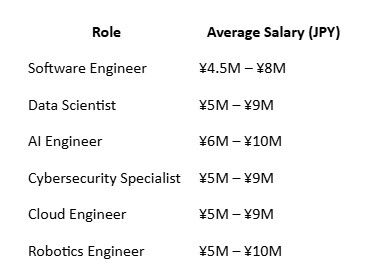
Experienced professionals often earn significantly higher salaries.
Work Visa & Long-Term Opportunities
After graduation, students can transition to work visas.
Popular categories include:
- Engineer/Specialist in Humanities/International Services
- Highly Skilled Professional Visa
- Research Visa
These pathways can eventually lead to permanent residency opportunities.
How Vidysea Helps You Study MS in Computer Science in Japan
Vidysea provides end-to-end support throughout your study-abroad journey.
Services include:
AI-Powered University Matching
Find the most suitable universities and programmes.
Application Guidance
Support for SOPs, LORs, and applications.
Scholarship Assistance
Identify funding opportunities.
Visa Support
Guidance throughout the student visa process.
Pre-Departure Assistance
Prepare confidently for life in Japan.
Frequently Asked Questions
Is Japan good for MS in Computer Science?
Yes. Japan offers globally ranked universities, advanced research opportunities, affordable tuition, and strong career prospects.
Is GRE required?
Most universities do not require GRE, though some programmes may consider it.
Can I study in English?
Yes. Many universities offer fully English-taught Computer Science master's programmes.
Can international students work while studying?
Yes. Students can work up to 28 hours per week.
Is Japanese language mandatory?
Not always, but Japanese language skills significantly improve employment opportunities after graduation.
Conclusion
Pursuing an MS in Computer Science in Japan offers students an exceptional combination of academic excellence, research innovation, affordability, and career growth. With globally respected universities, cutting-edge technology ecosystems, strong industry partnerships, and growing demand for skilled technology professionals, Japan has become one of the most attractive destinations for computer science education.
Whether your interests lie in Artificial Intelligence, Data Science, Software Engineering, Robotics, Cybersecurity, or Cloud Computing, an MS in Computer Science in Japan can help you build the skills, experience, and international exposure needed for a successful global career. With expert guidance from Vidysea, your journey toward studying and working in Japan becomes structured, informed, and future-ready.