
More reminders

Got dreams to achieve? Hop on as we take you on your journey to success!


Services
Contact Info

Noida office
+91 7428715522Bangalore office
+91 8861432223 support [at] vidysea.com
Copyright@Vidysea
More reminders
Got dreams to achieve? Hop on as we take you on your journey to success!
Noida office
+91 7428715522Bangalore office
+91 8861432223support [at] vidysea.comCopyright@Vidysea
Japan is one of the world's largest economies and home to globally recognised corporations in manufacturing, automotive, technology, banking, healthcare, and consulting. As Japanese companies continue expanding internationally and adopting advanced financial strategies, the demand for finance professionals with strong analytical, managerial, and strategic skills is increasing rapidly.

Team Vidysea
Published Updated

For students and professionals looking to build a successful career in finance, accounting, and business leadership, pursuing a CMA in Japan can be a highly valuable career investment. The Certified Management Accountant (CMA) credential is globally recognised and focuses on financial planning, performance management, strategic decision-making, and business leadership.
Whether you are an Indian student planning to study and work in Japan or a finance professional seeking international opportunities, understanding the scope of CMA in Japan can help you make informed career decisions.
This comprehensive guide covers everything you need to know about CMA in Japan, including certification requirements, eligibility criteria, exam structure, costs, salary expectations, career opportunities, and how the qualification can support your long-term professional growth.
The CMA in Japan refers to earning the globally recognised Certified Management Accountant (CMA) credential awarded by the Institute of Management Accountants (IMA), USA, and applying this qualification within Japan's corporate and financial sectors.
Unlike traditional accounting qualifications that focus heavily on auditing and taxation, the CMA in Japan emphasizes:
As Japanese companies increasingly operate across global markets, finance professionals with CMA credentials are becoming highly valuable in multinational organisations and international business environments.
There are several compelling reasons to pursue a CMA in Japan.
The CMA credential is recognised in more than 150 countries worldwide.
Professionals holding a CMA in Japan can pursue opportunities not only in Japan but also across Asia, Europe, North America, and the Middle East.
Modern organisations require finance leaders who can contribute to business strategy rather than simply manage accounting records.
The CMA in Japan develops practical skills that help professionals:
The CMA in Japan can accelerate career progression into senior finance and management positions.
Popular leadership roles include:
Professionals with a CMA in Japan often command higher salaries than those without professional certifications.
The qualification demonstrates expertise in financial management, strategic planning, and leadership.
Many multinational corporations operating in Japan actively recruit professionals with internationally recognised certifications.
A CMA in Japan enhances employability with:
Japan offers unique advantages for finance professionals pursuing international careers.
Japan remains one of the largest and most influential economies globally.
Industries driving demand include:
Japan hosts major companies such as:
These organisations require professionals with advanced financial management expertise.
Japanese companies continue expanding overseas, increasing the need for finance professionals with international qualifications such as the CMA in Japan.
To pursue a CMA in Japan, candidates must meet the global eligibility standards established by the Institute of Management Accountants (IMA).
Candidates must hold:
International degrees from India and other countries are generally accepted.
Students may begin the examination process before completing their degree, provided final requirements are fulfilled later.
Applicants must become members of the Institute of Management Accountants (IMA).
Membership is mandatory for obtaining the CMA in Japan credential.
Candidates must complete:
Acceptable areas include:
Experience may be completed before or after passing the examinations.
The CMA in Japan consists of two examination parts.
Topics include:
Topics include:
Each exam:
Minimum passing score:
Most candidates spend approximately 3–6 months preparing for each part.
Join the Institute of Management Accountants (IMA).
Register for the CMA programme.
Pay the entrance and examination fees.
Prepare using official CMA study resources and review materials.
Appear for Part 1 and Part 2 examinations.
Complete the required professional work experience.
Receive the CMA certification.
Maintain certification through Continuing Professional Education (CPE) requirements.
The overall cost of pursuing a CMA in Japan depends on membership fees, examination fees, and study materials.
Approximately ¥45,000 – ¥60,000 annually
Approximately ¥50,000 – ¥60,000
Approximately ¥85,000 – ¥100,000 per exam part
Approximately:
¥250,000 – ¥450,000
excluding coaching or third-party preparation courses.
Compared to many postgraduate programmes, the CMA in Japan remains a cost-effective professional qualification with strong career returns.
A CMA in Japan opens doors to diverse finance and business leadership roles.
Popular positions include:
Supports budgeting, forecasting, and financial planning.
Provides business insights through financial analysis and reporting.
Leads financial planning and performance management activities.
Works closely with business leaders to support strategic decisions.
Manages cost control and profitability analysis.
Oversees financial operations and internal controls.
Handles investment planning, capital management, and financial strategy.
Senior leadership role responsible for organisational financial performance.
Professionals with a CMA in Japan are recruited across various industries.
Sony, Fujitsu, NEC, SoftBank
Toyota, Honda, Mitsubishi, Panasonic
MUFG, Mizuho, Nomura
Deloitte, EY, KPMG, PwC
Takeda, Astellas, Daiichi Sankyo
The salary potential for CMA-certified professionals is attractive.
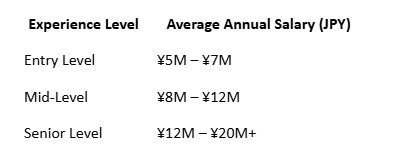
Professionals with Japanese language skills and international experience often earn significantly higher compensation packages.
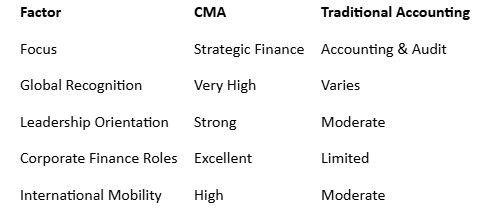
The CMA in Japan is particularly suited for professionals aiming for management and leadership positions.
Vidysea supports students and professionals planning careers in Japan by offering:
Guidance on finance and accounting career pathways.
Recommendations for finance-related degrees that complement CMA certification.
Assistance in finding financial support opportunities.
Guidance for studying and working in Japan.
Helping students align education with future professional certifications and global career goals.
Yes. The CMA credential is recognised by multinational corporations, consulting firms, and international businesses operating in Japan.
Yes. Indian students can complete CMA examinations and use the qualification to pursue finance careers in Japan.
Not for CMA certification itself. However, Japanese language skills can significantly improve job opportunities.
Professionals can earn between ¥5 million and ¥20 million+ annually depending on experience, role, and industry.
Yes. CMA focuses strongly on management accounting, financial planning, analytics, and strategic decision-making.
The CMA in Japan is an excellent choice for students and professionals seeking global finance careers, leadership opportunities, and higher earning potential. With Japan's strong economy, multinational business environment, and growing demand for strategic finance professionals, the CMA credential offers a competitive advantage in today's job market.
Whether you aim to become a Financial Analyst, Finance Manager, Controller, or CFO, pursuing a CMA in Japan can provide the skills, recognition, and career growth needed to succeed in an increasingly global business environment. Combined with the right education and professional experience, the CMA credential can become a powerful stepping stone toward long-term career success.

MS in Japan 2026: Complete Guide to Studying, Working & Building a Global Career in Japan

MS in Computer Science in Japan 2026: Complete Guide to Universities, Fees, Scholarships & Career Opportunities

Japan’s Digital Future: A Complete Guide to the Top Universities for MIS in Japan