Beyond the Degree: Your Complete Guide to After MS Jobs in Japan
Japan has become one of the world's leading destinations for international students seeking advanced education, cutting-edge research opportunities, and rewarding global careers. With globally respected universities, a highly developed economy, and a strong demand for skilled professionals, pursuing a Master's degree in Japan can be a transformative step toward long-term career success.

Team Vidysea
July 10, 2026

However, one of the most important questions students ask before applying is: What are the career opportunities and after MS jobs in Japan?
Understanding the landscape of after MS jobs in Japan is crucial for evaluating return on investment (ROI), planning your future career, and making informed study-abroad decisions.
This comprehensive guide explores the scope of after MS jobs in Japan, salary expectations, work visa options, top hiring industries, career opportunities, and practical strategies to help international graduates succeed in the Japanese job market.
Why Japan is an Excellent Destination for MS Graduates
Japan is the world's third-largest economy and a global leader in technology, engineering, robotics, automotive manufacturing, healthcare innovation, and research.
Several factors make after MS jobs in Japan highly attractive to international students.
Strong Economy and Global Industries
Japan hosts some of the world's most influential companies, including:
- Toyota
- Sony
- Panasonic
- Hitachi
- Honda
- Mitsubishi
- SoftBank
- Rakuten
- Fujitsu
- Canon
These organisations actively recruit highly skilled graduates.
Growing Demand for International Talent
Japan is facing workforce shortages due to an aging population and declining birth rates.
As a result, employers are increasingly welcoming international professionals for after MS jobs in Japan, especially in technical and specialised sectors.
High Quality of Life
Japan offers:
- Safe cities
- Excellent public transportation
- Modern infrastructure
- Advanced healthcare
- Strong work culture
These factors contribute to the appeal of after MS jobs in Japan.
Innovation and Research Opportunities
Graduates from Japanese universities benefit from exposure to:
- Artificial Intelligence
- Robotics
- Semiconductor Technology
- Renewable Energy
- Biotechnology
- Advanced Manufacturing
These fields continue to drive demand for skilled professionals.
Understanding the Job Market After MS in Japan
The market for after MS jobs in Japan varies depending on your field of study, technical skills, language ability, and work experience.
Several sectors offer excellent opportunities for international graduates.
After MS in Computer Science and Information Technology
Japan is investing heavily in digital transformation, cloud computing, cybersecurity, and software development.
Popular job roles include:
- Software Engineer
- Full Stack Developer
- Cloud Engineer
- Cybersecurity Specialist
- AI Engineer
- Systems Architect
- DevOps Engineer
Major Recruiters
- Rakuten
- SoftBank
- Fujitsu
- NEC
- NTT Data
- IBM Japan
- Accenture Japan
The demand for technology professionals makes Computer Science one of the strongest areas for after MS jobs in Japan.
After MS in Data Science and Artificial Intelligence
Japan is actively investing in AI-driven innovation and data analytics.
Popular positions include:
- Data Scientist
- Machine Learning Engineer
- Data Analyst
- Business Intelligence Analyst
- AI Researcher
- Analytics Consultant
Key Hiring Sectors
- Financial Services
- E-commerce
- Healthcare
- Automotive Technology
- Smart Manufacturing
Professionals with advanced analytics skills enjoy excellent prospects for after MS jobs in Japan.
After MS in Engineering
Engineering remains one of Japan's strongest employment sectors.
Popular specialisations include:
Mechanical Engineering
Career Roles
- Design Engineer
- Manufacturing Engineer
- Production Engineer
Electrical & Electronics Engineering
Career Roles
- Embedded Systems Engineer
- Semiconductor Engineer
- Power Systems Engineer
Civil Engineering
Career Roles
- Infrastructure Engineer
- Construction Manager
- Transportation Planner
Robotics Engineering
Career Roles
- Robotics Developer
- Automation Engineer
- Control Systems Specialist
Engineering graduates consistently find strong after MS jobs in Japan due to the country's industrial strength.
After MS in Business and Management
Japan's multinational corporations offer numerous opportunities for graduates with business expertise.
Popular roles include:
- Business Analyst
- Strategy Consultant
- Project Manager
- Marketing Manager
- Operations Manager
- Supply Chain Analyst
Global companies particularly value professionals who understand both international business and Japanese market dynamics.
After MS in Finance and FinTech
Japan is one of Asia's major financial centres.
Graduates can pursue careers as:
- Financial Analyst
- Investment Analyst
- Risk Manager
- FinTech Consultant
- Corporate Finance Specialist
Major Employers
- Nomura
- Mitsubishi UFJ Financial Group
- Mizuho Bank
- Goldman Sachs Japan
- JPMorgan Japan
The finance sector continues to create attractive after MS jobs in Japan.
Work Visa Options After Graduation
One of the most important considerations when evaluating after MS jobs in Japan is post-study work authorization.
Change of Visa Status
After securing employment, students can transition from a Student Visa to a Work Visa.
Common categories include:
- Engineer/Specialist in Humanities/International Services Visa
- Highly Skilled Professional Visa
- Research Visa
Highly Skilled Professional Visa
Japan offers special benefits for highly qualified professionals.
Advantages include:
- Faster permanent residency pathways
- Family sponsorship benefits
- Longer residency periods
This visa category makes after MS jobs in Japan even more attractive for skilled graduates.
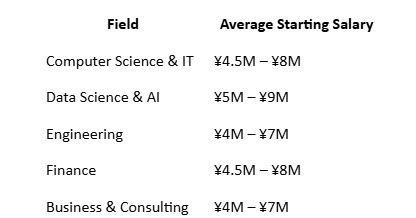
Salary Expectations for After MS Jobs in Japan
Salary levels depend on:
- Industry
- University
- Technical skills
- Japanese language proficiency
- Work experience
Approximate annual salaries are shown below.
Highest-Paying Industries for After MS Jobs in Japan
Several industries offer particularly strong compensation.
Artificial Intelligence
High demand and premium salaries.
Cybersecurity
Critical workforce shortages create excellent opportunities.
Semiconductor Manufacturing
A strategic national priority in Japan.
Financial Services
Strong demand for analysts and technology specialists.
Consulting
Global consulting firms regularly recruit international graduates.
Best Cities for After MS Jobs in Japan
Location plays an important role when exploring after MS jobs in Japan.
Tokyo
Japan's largest employment hub.
Major sectors:
- Finance
- Technology
- Consulting
- E-commerce
Osaka
Strong opportunities in:
- Manufacturing
- Healthcare
- Engineering
Yokohama
Popular for:
- Technology
- Automotive
- Logistics
Nagoya
Known for:
- Automotive Engineering
- Industrial Manufacturing
Fukuoka
Emerging startup and technology ecosystem.
Importance of Japanese Language Skills
While many international companies operate in English, Japanese language proficiency significantly improves access to after MS jobs in Japan.
Recommended levels:
JLPT N3
Helpful for daily communication.
JLPT N2
Preferred by many employers.
JLPT N1
Strong competitive advantage.
Students who combine technical expertise with Japanese language skills often achieve better career outcomes.
How to Find After MS Jobs in Japan
Effective job-search strategies include:
University Career Centres
Japanese universities provide strong placement support.
Internship Programmes
Many internships lead directly to full-time employment.
Job Portals
Popular platforms include:
- Daijob
- CareerCross
- Indeed Japan
Networking
Attend:
- Career fairs
- Industry events
- Alumni networking sessions
Networking plays a significant role in securing after MS jobs in Japan.
Common Challenges International Students Face
Although opportunities are abundant, students should be aware of potential challenges.
Language Barriers
Japanese proficiency often improves employability.
Cultural Adaptation
Understanding workplace etiquette is important.
Competitive Hiring Processes
Preparation and networking are essential.
Despite these challenges, the demand for international talent continues to grow.
Future Trends in the Japanese Job Market
Several sectors are expected to drive future demand.
Artificial Intelligence
Rapid expansion across industries.
Robotics and Automation
A cornerstone of Japan's economy.
Renewable Energy
Growing government investment.
Healthcare Technology
Aging population creates new opportunities.
Data Science and Cybersecurity
Continued demand for specialised talent.
These industries will shape the future of after MS jobs in Japan.
How Vidysea Helps Students Build Careers in Japan
Vidysea supports students beyond university admissions.
Our services include:
University Shortlisting
Find programs aligned with career goals.
Career Planning Guidance
Identify high-demand sectors.
Visa and Immigration Support
Understand post-study work options.
Scholarship Assistance
Reduce educational expenses.
End-to-End Study Abroad Support
From applications to career planning.
Frequently Asked Questions
What are the most in-demand after MS jobs in Japan?
Technology, Data Science, Artificial Intelligence, Engineering, Robotics, and Finance are among the fastest-growing sectors.
Can international students work in Japan after graduation?
Yes. Graduates can switch to an appropriate work visa after securing employment.
Is Japanese language proficiency necessary?
Not always, but JLPT N2 or higher significantly improves job prospects.
What salary can I expect after MS in Japan?
Most graduates earn between ¥4 million and ¥8 million annually, depending on their field.
Which city offers the most job opportunities?
Tokyo remains the largest hub for after MS jobs in Japan, followed by Osaka, Yokohama, and Nagoya.
Conclusion
Pursuing a Master's degree in Japan opens doors to some of the most exciting career opportunities in Asia. The market for after MS jobs in Japan is strong across technology, engineering, finance, robotics, data science, and business sectors. With world-class universities, a highly developed economy, growing demand for skilled international professionals, and attractive work visa pathways, Japan offers excellent long-term career prospects.
By developing in-demand skills, gaining practical experience, and understanding the Japanese job market, international students can successfully secure after MS jobs in Japan and build rewarding global careers in one of the world's most innovative economies.