Why Study MS in USA? Top Reasons, Universities, and Career Benefits
For decades, the United States has remained the most preferred destination for higher studies. Every year, thousands of students from around the world travel to pursue an MS in USA, seeking top-quality education, international exposure, and excellent job opportunities. But what makes the USA such a popular study destination? Is it really worth the investment? In this detailed blog, we’ll explore the top reasons to study in the USA, the best universities, eligibility requirements, costs, and career benefits — everything you need to know before planning your MS in USA.

Team Vidysea
November 18, 2025
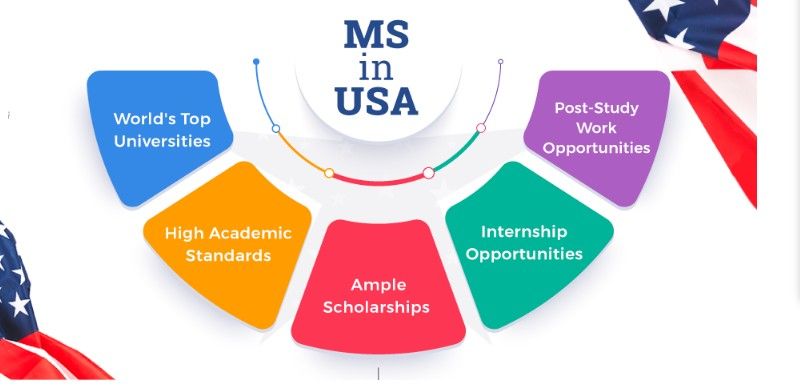
1. Global Reputation for Academic Excellence
The USA is home to some of the best universities in the world, including MIT, Stanford, Harvard, and UC Berkeley. These institutions are recognized globally for their cutting-edge research, innovative programs, and experienced faculty.
When you pursue an MS in USA, you are exposed to an academic environment that values creativity, research, and real-world problem-solving. US universities are known for their flexibility and interdisciplinary approach, allowing students to tailor their coursework based on interests and goals.
2. Wide Range of Specializations
The best part about studying MS in USA is the wide range of specializations available. Whether it’s Computer Science, Mechanical Engineering, Biotechnology, or Data Analytics, there’s a program for every interest.
Students can also combine different subjects to create personalized learning paths. For example, you can pursue an MS in Computer Science with a focus on Artificial Intelligence, or blend engineering with business analytics. This flexibility ensures that your degree matches your career goals perfectly.
3. Research and Innovation Opportunities
Another major reason why students prefer an MS in USA is the emphasis on research and innovation. The USA spends billions every year on R&D, offering graduate students the chance to participate in meaningful research projects.
From artificial intelligence to biotechnology and renewable energy, American universities provide access to advanced labs, top professors, and industry collaboration opportunities. Many students even publish papers or secure patents while completing their MS.
Such hands-on research experience makes you stand out in the global job market.
4. Career Opportunities and Global Recognition
Earning an MS in USA significantly enhances your career prospects. The country is home to global tech leaders like Google, Amazon, Apple, and Microsoft, as well as world-class research institutions and startups.
Employers around the world value American degrees because they reflect high academic standards and practical skills. The Optional Practical Training (OPT) program allows international students to work in the USA for 12 months after graduation, and STEM graduates can extend this period to 36 months.
Average starting salaries for MS graduates in the USA are among the highest in the world — ranging from $80,000 to $120,000 annually, depending on the specialization.
5. Multicultural Learning Environment
Studying MS in USA means being part of a diverse, multicultural environment. You’ll meet students from different countries, backgrounds, and perspectives. This exposure enhances your communication skills, teamwork, and adaptability — essential qualities for future leaders.
The diversity on American campuses ensures that you learn not just from books and professors but also from your peers, making your educational experience truly global.
6. Flexible Curriculum and Practical Learning
US universities offer flexible curriculums that emphasize practical learning. You can choose elective courses, switch majors, and work on real-world projects or internships while studying.
This combination of theory and practice ensures that when you graduate with an MS in USA, you are job-ready and confident. The focus on teamwork, innovation, and communication also prepares students for international careers.
7. Scholarships and Financial Assistance
While pursuing an MS in USA can be costly, there are numerous scholarships and assistantship opportunities available for international students.
Some of the most popular options include:
- Fulbright Foreign Student Program
- Hubert Humphrey Fellowship
- AAUW International Fellowships
- University-specific scholarships like Stanford Knight-Hennessy and MIT Presidential Fellowships.
Additionally, many universities offer Teaching Assistantships (TAs) and Research Assistantships (RAs) that provide stipends and tuition fee waivers. Vidysea helps students explore these financial options and apply successfully.
8. Post-Study Work and Immigration Benefits
After completing your MS in USA, you can apply for Optional Practical Training (OPT), which allows you to work in the USA for up to one year. If you are a STEM student (Science, Technology, Engineering, Mathematics), you can extend this to 36 months, gaining valuable work experience.
This real-world exposure strengthens your resume, enhances employability, and opens doors to long-term career opportunities in the USA or globally.
9. Top Universities for MS in USA
Here are some of the top-ranked universities for MS programs in the United States:
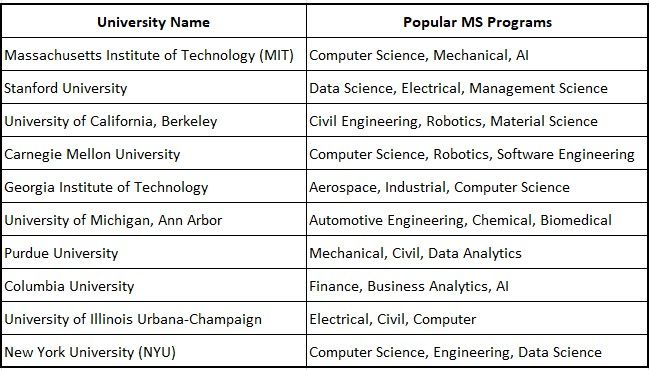
Each of these universities has unique strengths, and your choice should depend on your area of interest, budget, and career goals.
10. Admission Requirements and Eligibility
To apply for an MS in USA, you need to meet certain academic and language requirements. These may vary depending on the university and program.
Common requirements include:
- A Bachelor’s degree (4 years) from a recognized institution.
- Minimum GPA of 3.0/4.0 or equivalent percentage.
- Valid GRE or GMAT scores (depending on the program).
- English language proficiency through TOEFL, IELTS, or Duolingo.
- Statement of Purpose (SOP), Letters of Recommendation (LORs), and Resume/CV.
- Proof of financial resources for tuition and living expenses.
11. Application Process for MS in USA
Applying for an MS in USA involves multiple steps, but with proper guidance, it becomes straightforward.
Step-by-step process:
- Research and shortlist universities.
- Prepare for GRE/GMAT and language tests.
- Gather academic transcripts and LORs.
- Write a compelling SOP.
- Submit applications before the deadlines.
- Attend interviews (if required).
- Receive admission offers and select your university.
- Apply for the F-1 Student Visa with your I-20 form.
- Attend Vidysea’s pre-departure sessions for smooth transition.
12. How Vidysea Can Help You
Pursuing an MS in USA can be a complex process, especially when dealing with multiple applications and visa paperwork. That’s where Vidysea comes in.
We offer complete end-to-end guidance — from counseling and test preparation to university shortlisting, application management, visa assistance, and scholarship advice.
Our experienced counselors make sure your profile stands out and help you secure admission in your dream university.
With Vidysea, your journey toward studying MS in USA becomes simpler, smoother, and stress-free.
Popular FAQs About MS in USA
1. What is the eligibility for MS in USA?To apply for an MS in USA, students need a recognized bachelor’s degree, good GRE/GMAT scores, English proficiency test results (TOEFL/IELTS), and a strong academic background.
2. What is the cost of studying MS in USA?The average cost of an MS in USA ranges from $30,000 to $60,000 per year, depending on the university and program. Public universities are usually more affordable than private ones.
3. How long does an MS in USA take to complete?Most MS programs in the USA take 1.5 to 2 years to complete. However, some research-oriented programs may take longer depending on the thesis or project requirements.
4. Is GRE mandatory for MS in USA?While GRE is accepted by most universities, some have made it optional. However, a good GRE score can strengthen your application and improve scholarship chances.
5. What are the best courses for MS in USA?Popular MS courses include Computer Science, Data Science, Mechanical Engineering, Electrical Engineering, Civil Engineering, and Business Analytics.
6. Can I work while studying MS in USA?Yes, international students can work up to 20 hours per week on campus during semesters and full-time during vacations.
7. What are the job opportunities after MS in USA?Graduates can work in top global companies under the OPT program. STEM students can work for up to 3 years in the USA after graduation.
8. Are scholarships available for MS in USA?Yes, there are plenty of scholarships and assistantships available for international students based on merit, research, and financial need.
9. Which intake is best for MS in USA?The Fall intake (August/September) is the most preferred as it offers the largest number of courses, scholarships, and job opportunities.
10. Why choose Vidysea for MS in USA guidance?Vidysea provides personalized counseling, helps with university selection, SOPs, applications, and visa guidance — making your journey to study MS in USA smooth and successful.
Conclusion
Choosing to pursue an MS in USA is a life-changing decision. From world-class education to global exposure and strong career prospects, the USA continues to lead as the top destination for international students.
Whether it’s innovation, flexible learning, or high employability — the benefits of studying in the USA are unmatched.
Start your journey today with Vidysea, your trusted education partner. Let our experts guide you through every step — from university applications to visa success — and help you turn your dream of studying MS in USA into reality.